Caviar Kits That Might Wow Your Guests
Outline
– Why this topic matters for modern home entertaining
– Guest impressions: what guests notice first and remember last
– Presentation style: visual rhythm, materials, and table design
– Tasting experience: pacing, temperature, pairings, and palate
– Practical logistics and sourcing for a smooth service
– Conclusion: how to turn one evening into your signature ritual
Guest Impressions: The Psychology of the First and Last Moments
Before anyone tastes a single pearl, they form an opinion. Research in hospitality and behavioral science often points to the “thin-slice” phenomenon—people make rapid judgments based on initial cues—and to the peak–end rule, where the most intense moment and the ending disproportionately shape memory. For a home host, this means the first sight of the table and the final toast or takeaway linger longer than the middle. A graceful welcome, a cleanly staged setup, and an unhurried pace establish trust and anticipation.
Think of the entry experience: a small tray with chilled water or a light non-alcoholic aperitif; a subtle aromatic note from fresh citrus peel; calm lighting that makes glassware shimmer rather than glare. These details create a threshold from ordinary to special. Then, when the caviar appears, guests are primed to notice texture, clarity, and finish—qualities often overshadowed when service feels rushed. Caviar kits are often chosen for their ability to create a memorable hosting moment.
Consider quick ways to set tone and reduce friction:
– Offer a one-sentence story about the evening’s theme, so guests know what to expect.
– Keep napkins, spoons, and small plates pre-arranged to eliminate awkward searching.
– Use a discreet chiller or bowl of ice to imply care without spectacle.
As the evening closes, mirror the welcome with a gentle finale. A tiny bite that echoes earlier flavors, a short note about what made the night unique, or a modest send-off—like a printed summary of pairings or a simple thank-you card—helps the end feel intentional. The arc becomes clear: you welcomed with warmth, guided with purpose, and concluded with poise. Guests remember that clarity, and it quietly elevates the perceived quality of the food itself.
Presentation Style: Shape, Color, and the Quiet Drama of the Table
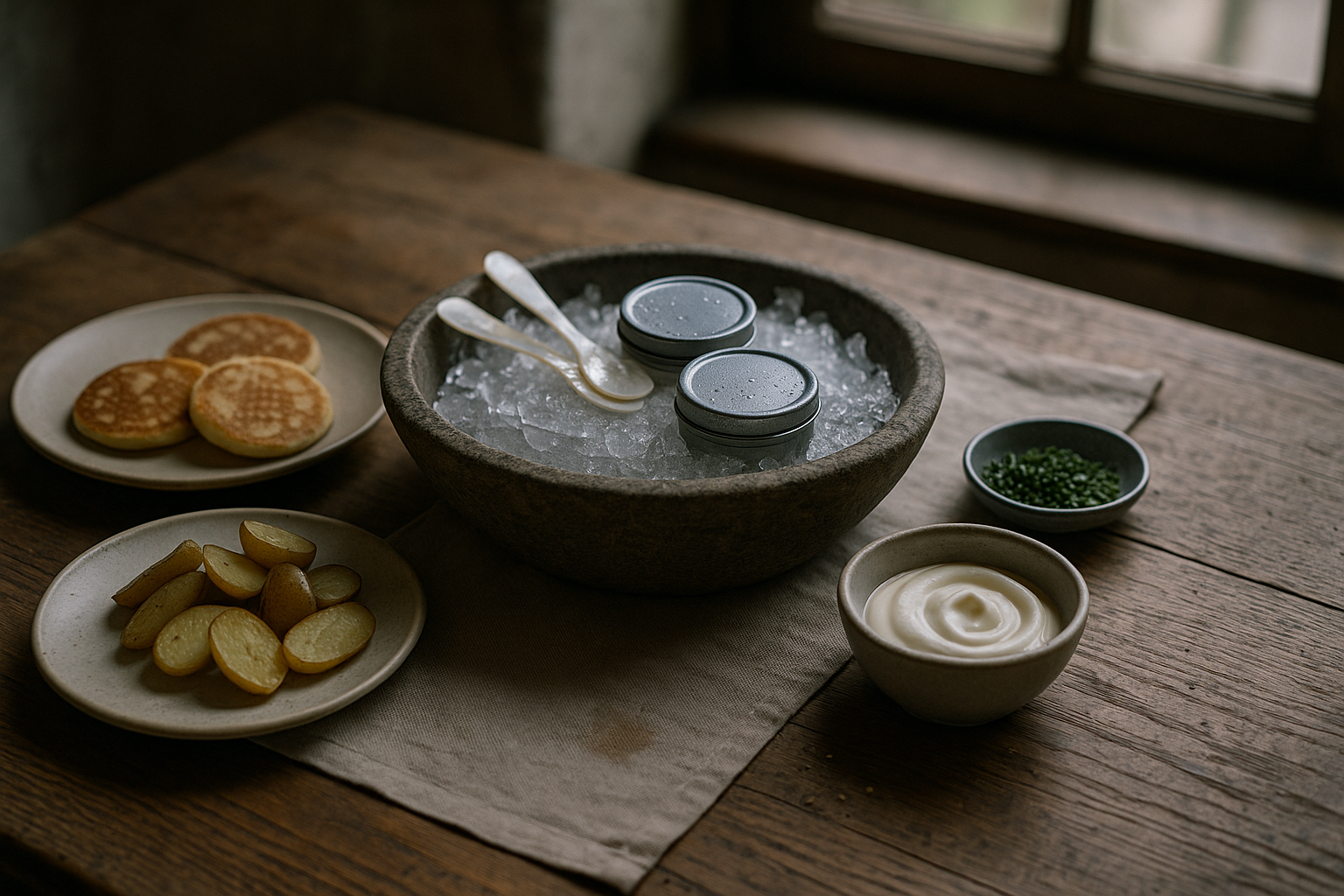
Presentation translates intention into sightlines. Start with proportion: small containers on a wide bed of ice can look isolated, while moderate containers nested in crushed ice read balanced and abundant. Neutral tones—stone, slate, pale linen—allow glossy beads to stand out. Under natural light, reflective surfaces like glass bowls or polished shells create soft highlights that draw the eye without stealing attention. Avoid overly busy patterns; negative space is an ally, signaling restraint and precision.
Materials matter. Non-reactive spoons preserve flavor integrity, and chilled glass keeps temperature steady. If you layer textures—a coarse linen runner beneath smooth ceramic plates—the contrast frames the key ingredient. Height can be introduced carefully: a low pedestal for the main caviar service, with supporting pairings (blinis, potatoes, eggs, herbs) arranged in a gentle crescent around it. This creates a visual rhythm that guides guests clockwise, reducing decision fatigue and traffic jams. Caviar kits are often chosen for their ability to create a memorable hosting moment.
Useful visual cues:
– Keep labels minimal and off to the side; let color and luster speak.
– Present pairings in color families—greens together, warm tones together—to organize sightlines.
– Place a single, neutral flower or sprig near the water station, not the caviar, to avoid scent interference.
Lighting should flatter, not spotlight. Position the table near a window where possible; soft morning or late-afternoon light makes surfaces glow and reduces harsh reflections. In the evening, choose indirect light that diffuses across linen and glass. The goal is a mood that whispers care without shouting opulence. When guests perceive deliberation in the arrangement, they lean in—curiosity heightens taste, and taste, in turn, validates the display.
Tasting Experience: Technique, Pairings, and Pace
A thoughtful tasting converts curiosity into memory. Temperature is foundational: aim to serve caviar well chilled, typically just above freezing, and keep it on ice without allowing water to touch the container. Encourage guests to start with a small, clean taste on the spoon, noticing aroma, pop, and finish before any pairing. This first unadorned bite becomes the benchmark against which subsequent combinations are compared.
Next comes pacing. Move from neutral to expressive pairings. Begin with mild bases—light blinis or small steamed potato rounds—then progress to soft dairy (a restrained dollop of crème or cultured butter), then herbal notes like chive or dill, and finally saline accents such as a crisp seaweed chip or a tiny wedge of quick-pickled cucumber. Offer sips of cold still or sparkling water between bites to reset the palate. A modest pour of a dry beverage, alcoholic or non-alcoholic, can underscore the briny-sweet contrast without overwhelming it. Caviar kits are often chosen for their ability to create a memorable hosting moment.
To help guests tune into nuance, prompt gently:
– “Notice the texture at first contact, then after a second.”
– “Compare the finish alone versus with a neutral base.”
– “Try the herb last and see how the aroma changes the aftertaste.”
Data from sensory science suggests that context—sound, color, and expectation—can sway flavor perception. Quiet the room a little during the first tasting round; lower background music and keep conversation prompts concise. Use neutral-colored plates to avoid color-induced taste biases. Finally, provide simple palate cleansers: chilled water, unsalted crackers, or thin slices of pear. When the arc is deliberate, guests experience not just richness, but structure—and structure is what they will recount later.
Practical Logistics and Sourcing: Quantities, Storage, and Planning
Memorable hosting relies on logistics working in the background. Estimate quantities by event style: for a focused tasting, 15–30 grams per person can be appropriate; for a broader gathering with multiple foods, 5–15 grams may suffice. Calculate backward from guest count and course plan. If you’re serving a single highlight flight, fewer supporting dishes help the star shine; if the caviar is a featured station within a larger spread, lighter portions prevent fatigue and waste.
Storage and timing are crucial. Keep sealed containers in the coldest part of the refrigerator, ideally near 0–4°C. Move to service on ice shortly before guests arrive and minimize open-air time to preserve texture and aroma. Plan delivery for a day or two before the event to allow for any unexpected delays. Bring a second, smaller container to the table rather than opening everything at once; this helps maintain quality through the evening. Caviar kits are often chosen for their ability to create a memorable hosting moment.
Practical checklist for hosts:
– Confirm dietary considerations and provide at least one fully vegetarian side and a non-alcoholic pairing.
– Prepare duplicates of key utensils to avoid bottlenecks at the station.
– Set a backup ice bowl in the freezer for quick swaps if the first warms too quickly.
Ethical and quality considerations also matter to today’s guests. Look for clear traceability, responsible aquaculture practices, and straightforward freshness information. Transparent sourcing notes—harvest method, region, and storage guidance—reassure guests and elevate trust. Spending can vary; building a tiered flight with two small varieties alongside a single, more luxurious taste helps balance budget and breadth. The quiet confidence that comes from planning lets the experience feel effortless, even if you’ve choreographed each step.
Conclusion: Turning a Nice Night into a Signature Ritual
Great hosting is repeatable. After your first caviar evening, refine two or three elements rather than reinventing the entire plan. Maybe you adjust the height of the display, swap in a different herb, or schedule the welcome sip five minutes earlier. Keep notes on guest reactions—what pairing drew the most conversation, where the flow slowed, which lighting felt flattering—and use them to compose your next version. Caviar kits are often chosen for their ability to create a memorable hosting moment.
Consider closing the loop with a brief message the next day: a single photo of the setup, a thank-you, and a list of the pairings you served. This small gesture reinforces the narrative and gives guests a vocabulary to describe their favorite bites. Over time, the ritual becomes your signature: calm welcome, clear storytelling, steady pacing, and a gentle finale. You’re not promising extravagance; you’re offering coherence, which many guests quietly crave.
Actionable next steps:
– Create a reusable bin with linens, spoons, and a dedicated ice bowl so setup is fast.
– Draft a two-minute host script to introduce the tasting arc.
– Build a short playlist with soft openings and quieter mid-tempo tracks for round one.
For readers who value thoughtful food experiences, this approach balances elegance with practicality. It leans on design that serves flavor, on pacing that protects nuance, and on choices that respect budgets and ethics. The result is a gathering that feels relaxed yet intentional—an evening your friends will recall for the glow it left behind as much as for the taste itself.

